


The link between movement and learning in under fives
Updated: Jun 19
When young children move, their brains receive more blood flow and nutrients, which in turn helps them understand the world around them and builds the foundation for attention, memory, language, and problem-solving.
Introduction
From the very start of life, children learn by moving and exploring their world. In the early years, a child’s developing brain and body work together. Movement does more than build strong muscles; it actually helps create the brain pathways that make learning possible.
For children under five, this connection is especially important. This is when the brain grows fastest, forming and strengthening the networks that support all future learning.
When young children move, their brains receive more blood flow and nutrients. Movement also activates their senses: touch, balance, sight, and awareness of where their body is in space. All of this helps children understand the world around them and builds the foundation for attention, memory, language, and problem-solving. Movement isn’t separate from learning. It’s how children think, explore, and understand.
As coach, Dr. Sarah Aiono, CEO and Co-Director of Longworth Education and an internationally recognised advocate for play pedagogy, emphasised during my training: the more young children move, the more their brains are wired for learning. For children under five, this wiring creates the foundation for everything that comes later: school, relationships, and life skills.
Movement enhances cognitive growth: what research tells us
Physical activity supports early brain development and strengthens the link between movement and learning in children under five. Studies have found that movement and physical activity improve cognitive outcomes in preschool children, particularly in areas like attention, self-control, and flexible thinking. Activities that combine physical movement with mental challenges (like obstacle courses or games with rules) produce the strongest benefits.
When children move with intention and pattern, their brains engage multiple systems at once. This strengthens the connections that support thinking and self- regulation.
Motor skills and brain development are connected
Research also shows that children who develop good motor skills (both fine motor control, like using crayons, and gross motor coordination, like jumping and balancing) often show stronger abilities in memory, visual processing, and problem-solving. Why? This is because physical activity increases oxygen flow to the brain and triggers chemical responses that support brain growth.
Regular movement supports brain structure
There is growing evidence that regular movement experiences contribute to how the brain develops structurally and functionally. While scientists are still studying exactly how this works, the benefits are clear: when young children engage in regular movement, play, and physical exploration, their brains get better at processing information and solving problems.
Together, these findings show that movement fuels reasoning, problem-solving, and early literacy and numeracy skills. It’s not just about physical health; it’s about building the brain itself.
Movement in practice: how we foster development at KEY academy
Movement is intentionally woven into how children learn. It’s not treated as “break time” or something separate from learning; it is learning. Our approach reflects a project-based, learner-centred philosophy where children actively explore, engage, and make meaning through their whole bodies.
Bees learning group (ages 1.5 to 3 years)
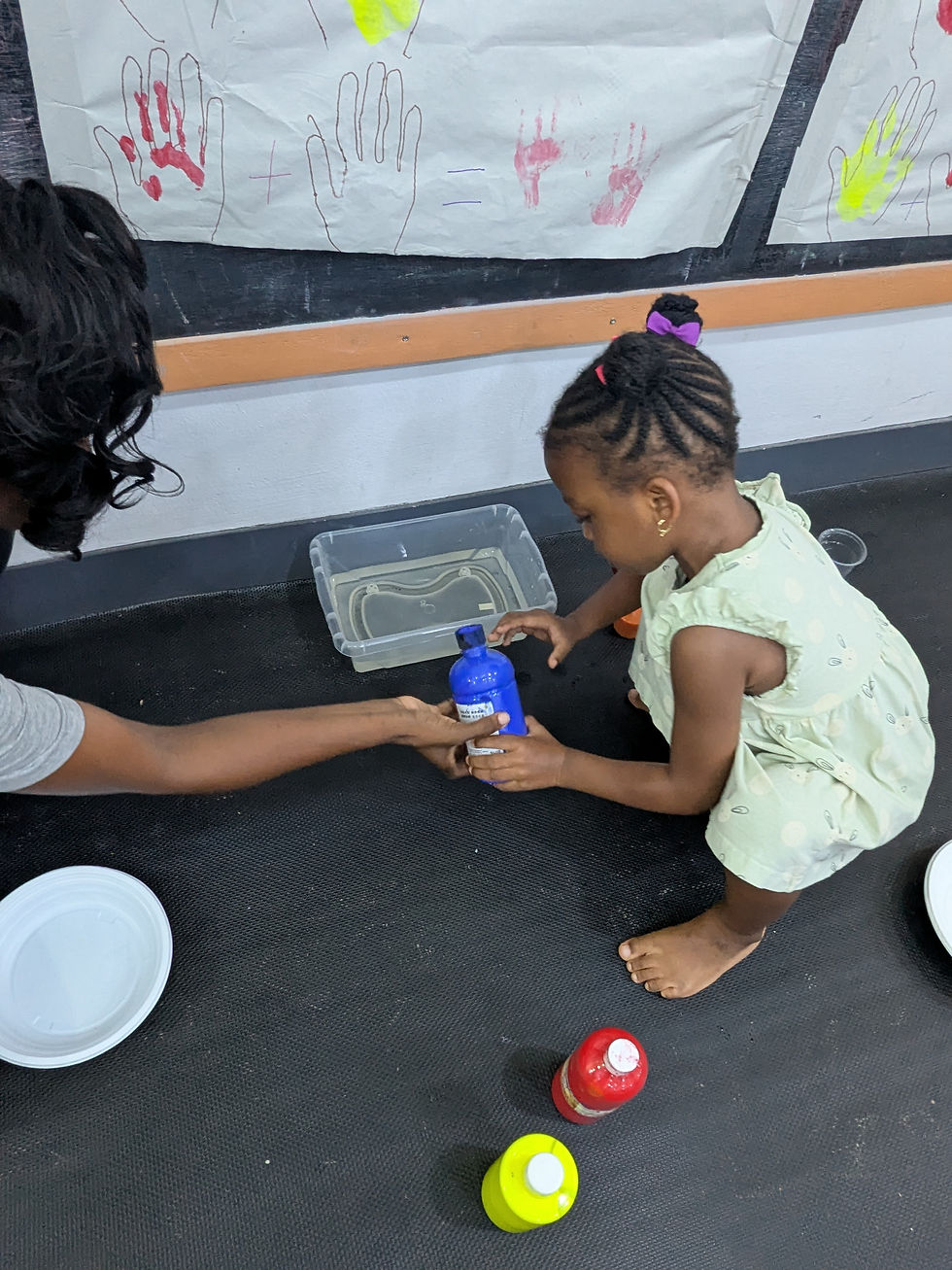
In the Bees learning group, movement is part of everyday life. Children explore open-ended resources that involve climbing, pushing, pulling, balancing, and floor-based play. Our learning spaces are designed without fixed structures, so children can move freely, experiment with actions, and engage with their environment through their senses.
Daily outdoor time allows children to run, jump, and interact with natural elements like sand, water, and trees. These experiences build balance, body awareness, and coordination while also encouraging early decision-making and problem-solving.
The Bees learning space doesn’t use fixed furniture, so children move freely as they learn. When they build with blocks, carry materials, or arrange objects, their bodies are involved in testing ideas about shapes, sizes, and patterns. This supports early mathematical thinking and spatial awareness, reinforcing the link between movement and learning in under-fives.
Seeds learning group (ages 3 to 5 years)
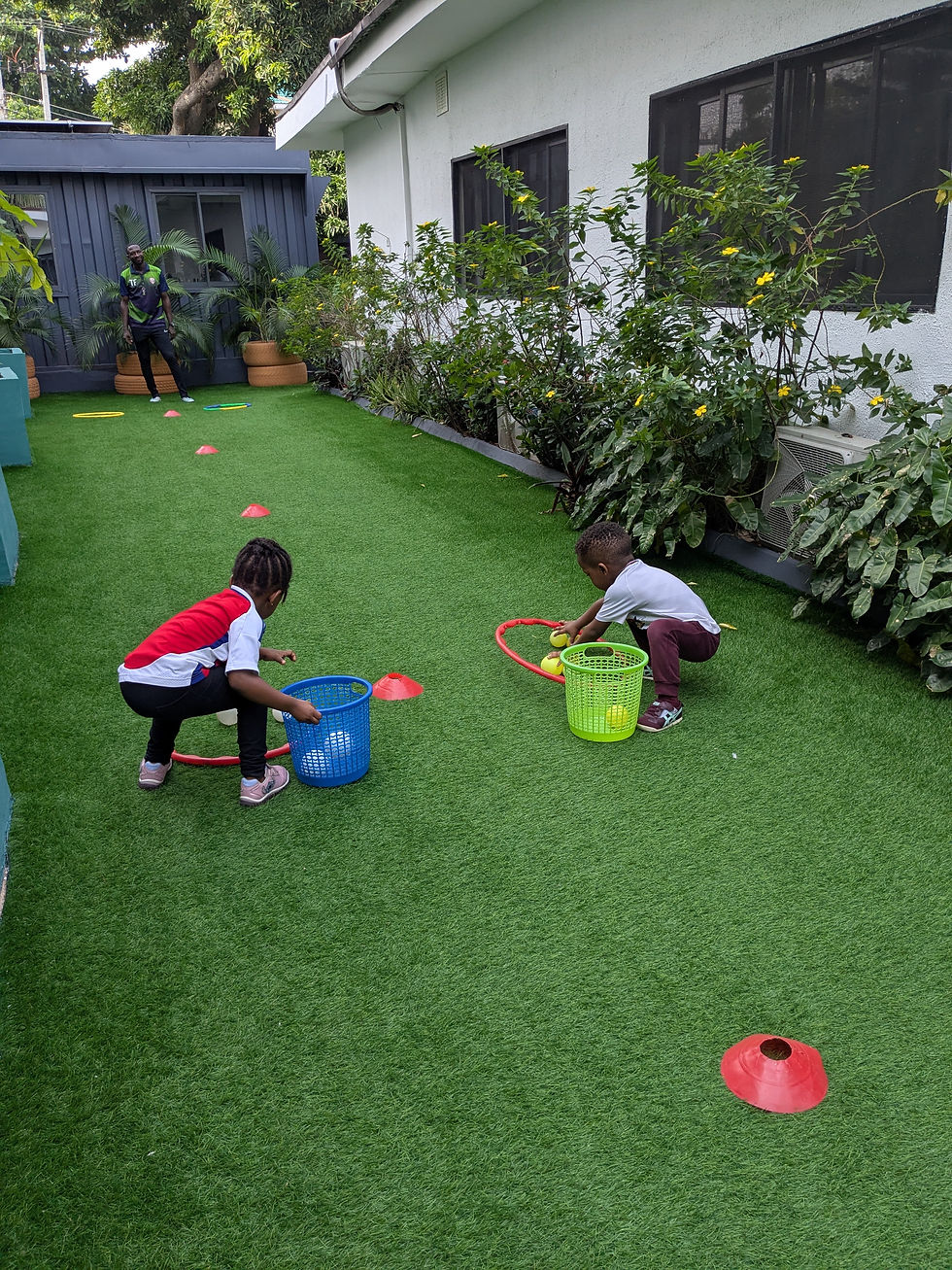
As children transition into the Seeds learning group, movement becomes more structured through weekly Physical Education sessions integrated into our learning program. Activities include obstacle courses, ball play, balance challenges, and cooperative movement games designed to support both physical and cognitive growth.
During Physical Education, children listen to instructions, remember sequences, adjust their actions, and reflect on what happened. These tasks build coordination, hand-eye skills, balance, and spatial awareness while also strengthening attention and self-regulation.
Movement is also woven into project-based learning. Children might act out stories, measure distances by stepping, or use physical motion to represent patterns in music or mathematics. The body becomes part of how ideas are explored and understood, deepening comprehension through experience.
Across both learning groups, movement is embedded in our daily rhythm, projects, and play. Every Friday, children participate in music and dance sessions where they move freely to rhythm and explore their favourite songs. These sessions allow children to express themselves through movement, build coordination, and develop rhythm and listening skills in joyful, playful ways. This reflects our belief that learning is active, social, and experiential, not passive.
Movement, play, and brain stimulation
Movement supports more than just physical development. It enriches key areas of early childhood learning, including language development, creative thinking, social interaction, and emotional regulation. When children negotiate space, follow rules in games, or share materials, they practise communication, and collaboration, all of which contribute to cognitive growth.
Active exploration also helps children manage their energy and maintain focus. Physically engaged children often transition more easily into quieter tasks like listening to stories or solving puzzles. Research suggests that movement experiences improve attention span and help children settle more easily, creating better conditions for learning.
For us, movement and play aren’t optional extras. They are core tools we use to nurture thinking, understanding, and application in meaningful ways.
Conclusion
Expecting very young children to sit still for long periods doesn’t align with what research tells us about early brain development. Children’s brains grow when they are active, engaged, and participating in experiences that challenge both body and mind.
By prioritising movement within play-based and project-based learning, KEY academy supports the developing brains of children under five and prepares them for future academic and life challenges.
The link between movement and learning in under-fives is clear: when children move, their brains grow. This isn’t only about physical health; it’s about nurturing cognitive development in ways that are natural, engaging, and developmentally appropriate.
Nnene Nsan, Lead Co-Learner, Seeds (ages 3 - 5 years) learning group
References
Diamond, A. (2015). Effects of physical exercise on executive functions: Going beyond simply moving to moving with thought. Annals of Sports Medicine and Research, 2(1), 1011.
Gabbard, C. (2018). Lifelong motor development (7th ed.). Wolters Kluwer.
Hillman, C. H., Erickson, K. I., & Kramer, A. F. (2008). Be smart, exercise your heart: Exercise effects on brain and cognition. Nature Reviews Neuroscience, 9(1), 58–65. https://doi.org/10.1038/nrn2298
Pellegrini, A. D., & Smith, P. K. (1998). Physical activity play: The nature and function of a neglected aspect of play. Child Development, 69(3), 577–598. https://doi.org/10.1111/j.1467-8624.1998.tb06226.x
Ratey, J. J., & Hagerman, E. (2008). Spark: The revolutionary new science of exercise and the brain. Little, Brown and Company.


Comments